
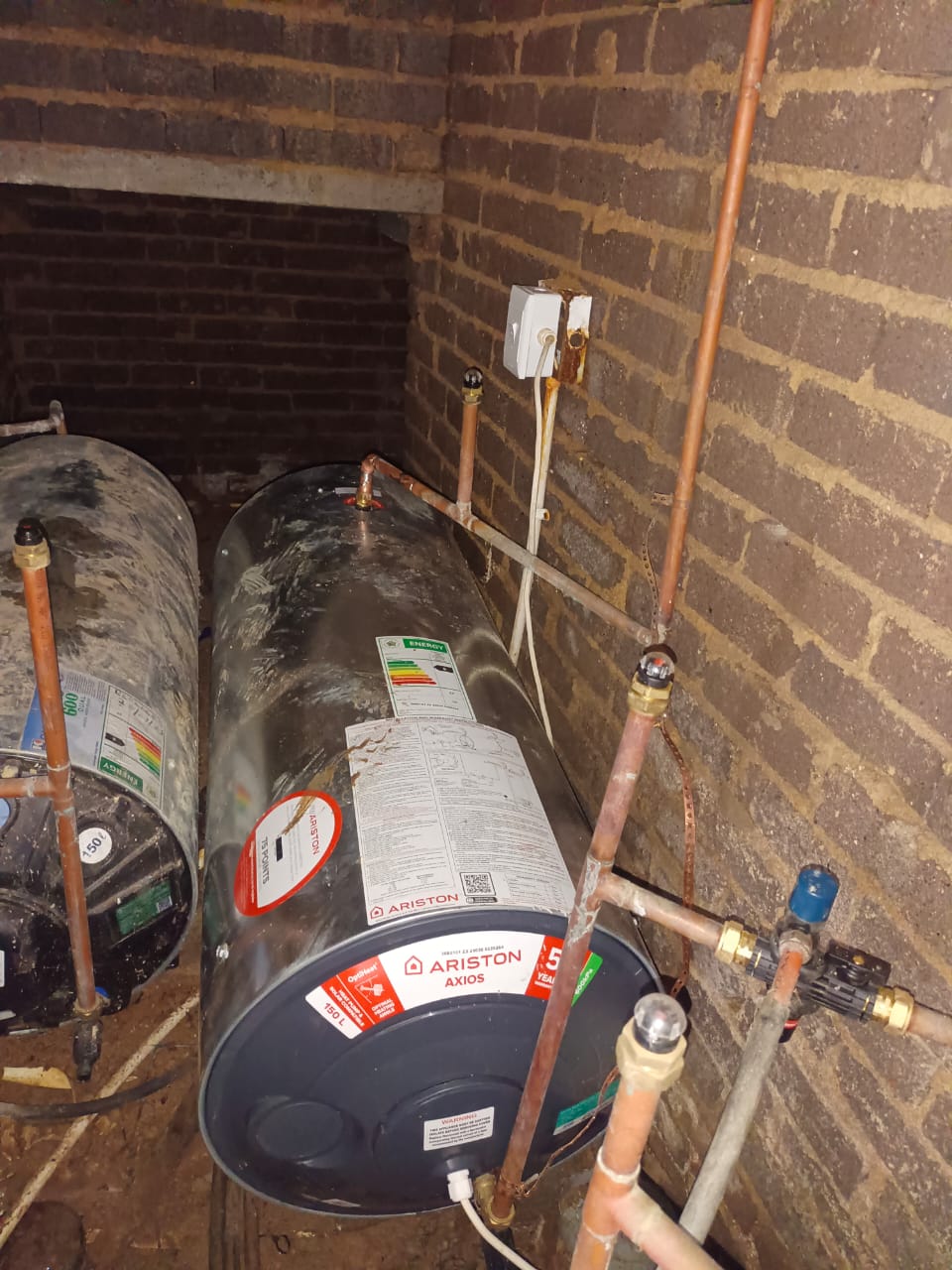
A geyser failure is one of the most disruptive — and expensive — plumbing problems in any Gauteng home. When a geyser bursts, it can dump 150 to 200 litres of water through your ceiling in minutes. Even a non-burst failure — no hot water on a winter morning — is a miserable start to the day. The good news: many geyser problems give warning signs, and simple maintenance can extend the life of your geyser by years.
Here are seven practical things you can do to maintain your geyser and avoid the shock of a cold shower or a flooded ceiling.
1. Check the drip tray and overflow pipe
Every geyser should have a drip tray underneath it with an overflow pipe that drains outside the building or to a safe point. Once every two to three months, check that the drip tray is dry and the overflow pipe is not blocked. If you see water in the drip tray, your geyser is leaking — even if the leak is small, it means the cylinder, a connection, or a valve is failing. A small leak does not fix itself; it only gets worse. If the drip tray has water, call a plumber.
2. Test the pressure relief valve
The temperature and pressure relief valve, usually on the side of the geyser, is a critical safety device. If the geyser overheats or over-pressurises, this valve opens to release water and prevent a burst. Gently lift the lever on the valve for a few seconds — water should flow out of the discharge pipe and stop when you release the lever. If the valve does not release water, or if it drips continuously afterwards, it needs replacement. Test this every six months.
3. Listen for unusual sounds
A healthy geyser should be quiet. If you hear popping, banging, hissing, or a continuous humming sound from the geyser, something is wrong. Popping can indicate sediment build-up at the bottom of the tank, which reduces efficiency and can eventually damage the cylinder. Hissing or sizzling when the element is on suggests the element is failing. Banging or knocking may point to pressure problems or loose components. Do not ignore geyser noises — silence is the sound of a healthy geyser.
4. Monitor your electricity consumption
A geyser typically accounts for 30% to 50% of a home's electricity usage. If your electricity bill increases noticeably without a change in your habits, the geyser element or thermostat may be failing, causing the geyser to run longer or more frequently. A faulty thermostat can also cause the geyser to overheat, which is both a safety risk and a waste of electricity. If your hot water is suddenly hotter than normal, check the thermostat setting on the geyser and have it inspected.
5. Check for rust, corrosion, or dampness
Visually inspect the outside of your geyser, the pipes connected to it, and the area around it once every few months. Look for rust spots on the cylinder, corrosion or white crusty deposits on pipe connections, damp patches, or water staining on the ceiling below. Any of these signs indicate a problem that needs attention before it becomes a full failure. Rust on the cylinder body is particularly concerning — it means the protective lining inside the tank may have been compromised.
6. Manage your geyser temperature setting
The recommended geyser temperature for most homes is 55°C to 60°C. Setting it higher wastes electricity, increases the risk of scalding, and puts more pressure on the cylinder and valves. Setting it lower than 55°C can allow bacteria such as Legionella to survive. If you use a geyser timer to heat water only during specific hours, set the temperature correctly for those periods — the geyser should reach the target temperature within the timed window.
7. Know the age of your geyser
Most residential geysers have a lifespan of 8 to 12 years, depending on water quality, usage, and whether the sacrificial anode inside the tank has been replaced. If your geyser is more than 8 years old and has never had an anode replacement or inspection, it is living on borrowed time. The cost of a planned geyser replacement is almost always lower than the cost of an emergency replacement after a burst — because a burst adds ceiling repairs, water damage, and emergency call-out fees to the bill.
If you do not know how old your geyser is, look for a manufacturer's label or date stamp on the cylinder. If there is none, and the geyser looks old, consider having a plumber inspect it and advise on its remaining life.
What to do if you spot a problem
If any of these checks reveal a problem — a wet drip tray, a faulty valve, unusual noises, rust, or constantly hot water — call a plumber sooner rather than later. Geyser problems do not improve with time, and the cost of a repair is almost always lower than the cost of dealing with a burst. A plumber can replace a faulty valve, thermostat, or element, flush sediment from the tank, or advise whether a full replacement is the smarter financial decision.
I Plumb provides geyser inspection, maintenance, repair, and replacement across Gauteng. Whether your geyser is showing warning signs or you simply want a professional to check that everything is safe and working correctly, the goal is to keep your hot water running reliably — and your ceiling dry.