
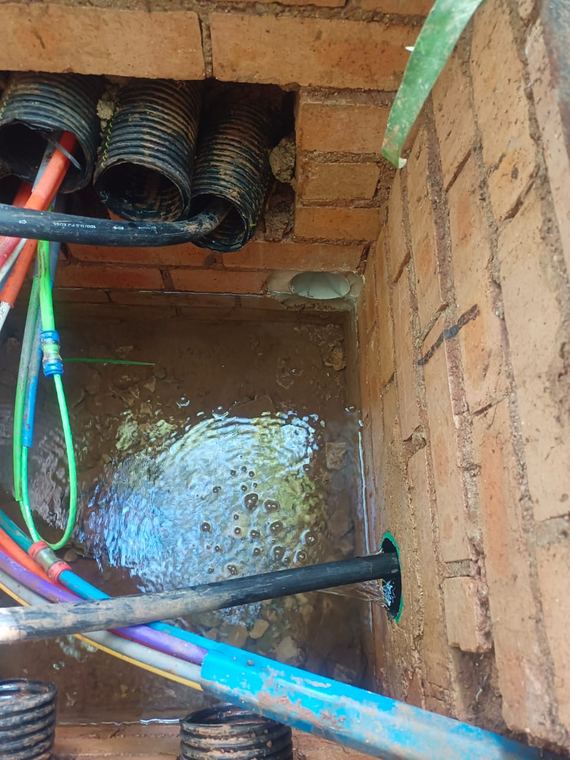
See burst pipe repairs.
Plumbing emergencies rarely happen at a convenient time. A burst geyser at 2am, a blocked sewer backing up before guests arrive, or a pipe spraying water through a ceiling on a Sunday afternoon — these are the moments when knowing what to do in the first 15 minutes can save tens of thousands of rands in damage.
This guide covers the practical steps every Gauteng homeowner, tenant, landlord, and property manager should know for the most common plumbing emergencies. You do not need plumbing skills for these steps — you need a clear sequence and the confidence to act quickly.
Burst pipe or flooding: immediate steps
A burst pipe is the most damaging plumbing emergency. Water can destroy ceilings, flooring, cupboards, and electrical systems in minutes. Follow these steps in order:
1. Shut off the main water supply
Find your main stopcock and turn it clockwise until it stops. In most Gauteng homes, the stopcock is near the water meter at the property boundary, outside the kitchen wall, in a garage, or in a utility cupboard. If you do not know where yours is, find it today — before an emergency happens. Once the main supply is off, open a cold tap at the lowest point in the house to release remaining pressure in the pipes.
2. Switch off electricity if water is near wiring
Water and electricity are a lethal combination. If water is near plugs, light fittings, the distribution board, or wet ceilings with wiring above, switch off the mains at the DB board — but only if you can reach it safely without standing in water. If you cannot reach it safely, stay clear and wait for help.
3. Contain the water
Use buckets, towels, mops, and plastic sheeting to direct water away from valuable items and electrical points. Move furniture, electronics, and rugs out of the affected area. If water is pooling in a ceiling, do not puncture it — a sagging ceiling can release a large volume of water suddenly and cause injury.
4. Call an emergency plumber
Once the water is isolated and people are safe, call for emergency plumbing support. Tell the plumber where the water is coming from, whether the main supply is off, whether electricity is affected, and what material the pipe appears to be if visible. This helps the plumber arrive with the right equipment.
Blocked drain emergency: when it cannot wait
Not every blocked drain is an emergency, but some situations need immediate attention. A drain that is overflowing sewage into a home, business, or shared area is a health hazard and should be treated as urgent. The same applies to a blocked drain that is causing water to back up into showers, baths, or basins across multiple fixtures.
While waiting for the plumber, stop using all water in the affected area. Do not flush toilets connected to the blocked line. Avoid pouring chemicals into a drain that is already overflowing — this creates a safety risk for the plumber who has to open the line. Place towels or sandbags at door thresholds if sewage is spreading.
Geyser failure: burst, leaking, or no hot water
A burst geyser needs the same initial response as a burst pipe: isolate the water supply to the geyser using the shut-off valve on the inlet pipe, switch off the geyser at the electrical isolator switch near the geyser or on the DB board, and contain any water that has already leaked. Do not attempt to open a hot geyser yourself — the water inside may be under pressure and near boiling temperature.
For a leaking geyser that is not actively flooding, you can place a bucket under the leak and isolate the water and power while waiting for the plumber. A geyser that simply stopped producing hot water is usually not an emergency and can wait for a normal service call, unless the element has failed in a way that tripped the electricity.
Serious leak: hidden but damaging
A hidden leak behind a wall, under a slab, or in a ceiling can cause structural damage over days or weeks. Signs include damp patches on walls or ceilings, unexplained water bills, the sound of running water when no taps are open, mould growth, or musty smells. If you suspect a hidden leak, isolate the section if possible, monitor your water meter to confirm loss, and arrange leak detection. The longer a hidden leak runs, the more expensive the eventual repair.
Prepare before an emergency happens
The single most valuable thing you can do today is locate your main stopcock, your geyser isolator switch, and any local shut-off valves under basins, behind toilets, and near outside taps. Make sure everyone in the household knows where they are and how to operate them. Keep the area around your water meter clear and accessible — a stopcock hidden behind overgrown plants, stored items, or a locked gate can waste critical minutes during a flood.
Save a reliable plumber's number in your phone before you need it. In Gauteng, emergency call-outs are available across most areas, but response times vary depending on location, time of day, and traffic. Knowing who to call before the panic starts means one less decision to make under pressure.
I Plumb provides emergency plumbing support across Gauteng for burst pipes, blocked drains, geyser failures, and serious leaks. Quick isolation, calm action, and the right help can turn a plumbing disaster into a manageable repair.